Sidr vs Manuka Honey Price: What You Are Really Paying For
· UpdatedSidr honey price surprises many first-time buyers. Yemeni Sidr and New Zealand Manuka are two of the most expensive honeys you can buy in Australia. The prices are not arbitrary. Here is what you are paying for, and how to tell if a jar is worth it.

The short answer
Both honeys are expensive because their harvests are small and seasonal, they are graded and lab-tested, and they travel far. Sidr adds remote valleys, a harvest that cannot be scaled, and air freight from Yemen. Manuka adds a national grading system that prices each MGO level.
What goes into the price of Yemeni Sidr
- A 40-day harvest. The Baghyah peak lasts about six weeks a year, and some seasons are poor.
- Remote valleys. Wadi Doan has no farms; hives are carried in by nomadic beekeepers.
- Supply that cannot grow. One valley's Sidr trees give what they give. Large quantities from a "single source" are a warning sign.
- A direct relationship. We buy from one beekeeper Tawfik has worked with since 2011, so the price reflects the honey, not a chain of traders.
- Lab testing. Every season is tested in New Zealand for TA and C4.
- Air freight. The honey is flown to Australia under controlled conditions.
- Packing in Australia. Packed in Victoria, in glass.
What goes into the price of Manuka
Manuka is priced by grade. The higher the MGO or UMF number, the higher the price, because high-grade honey is a smaller share of each harvest and must be tested and certified.
How to judge value per jar
- Price per 100 g, not per jar: jar sizes differ.
- A current lab result for the batch you are buying. A past peak result tells you nothing about today's jar.
- Origin you can check: a valley and a certificate of origin, not just a country.
- The season: for Sidr, Baghyah (October peak) is worth more than Marbai (spring).
- Independent recognition: blind-judged awards such as Great Taste.
Why the price changes from season to season
A dry year means fewer flowers and less honey. When the Baghyah is small, prices rise across Yemen, and good Sidr is harder to secure. A seller whose price never changes, whatever the season, is worth a second look.
What you should never pay for
- A grade the honey has not earned: Premium sold as Royal, secondary-season honey sold as peak.
- Old stock at new prices: always ask for the harvest year.
- Thickness alone: moisture can be removed to make ordinary honey look like fine Sidr.
Value beyond the jar
For many buyers, Sidr is a gift as much as a food: for Ramadan, weddings, a new baby or visiting the sick. A presented jar, with its lab report and awards, carries meaning a supermarket honey cannot.
When a low price is a warning
Genuine Yemeni Sidr is expensive even wholesale. A jar far below the market is usually diluted, from another country, a different honey, or regraded. Our guide on how to buy authentic Sidr lists the tricks.
Premium or Royal: where the extra goes
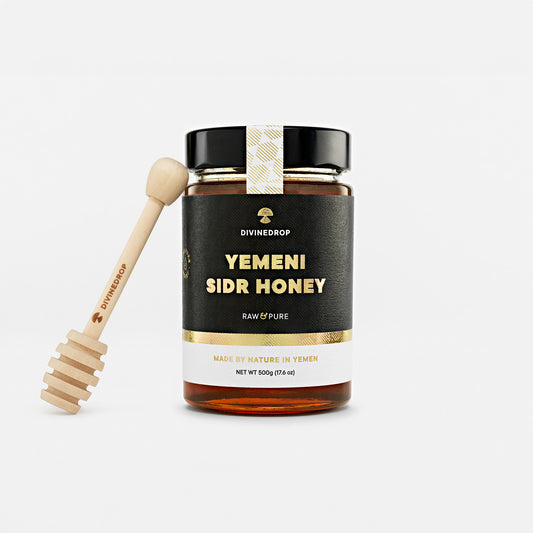
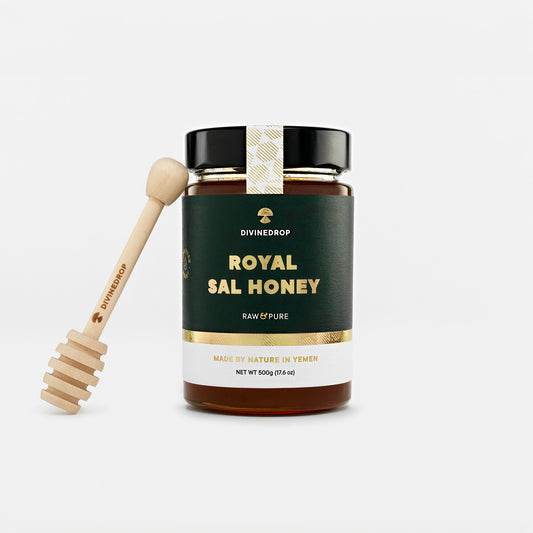
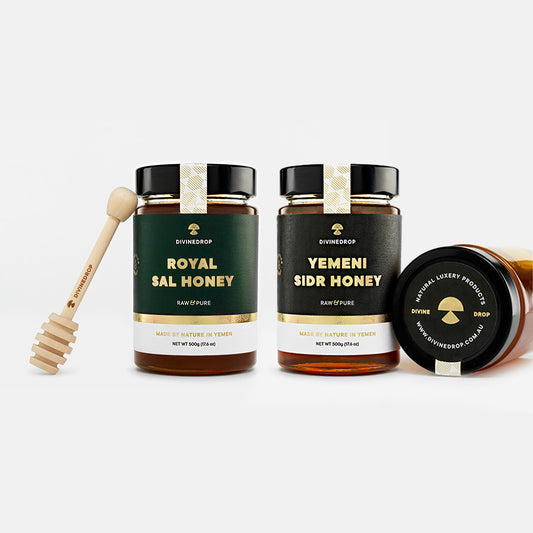
Our Royal Sidr costs more than our Premium Sidr because it is the peak selection of the season: the highest Sidr content we find, confirmed by a higher TA (33.4 against 26.8 in 2026) and a 2-star Great Taste award. There is less of it, and it is chosen from the best of the harvest.
Why the jar matters
We pack in glass in Victoria. Glass keeps raw honey without taste transfer, protects it from moisture and lets you see its colour and crystals, which are part of how you judge it.
Is Sidr worth it compared with Manuka?
If you want a floral, caramel honey with deep cultural meaning and high antioxidants, yes. If you need a specific MGO grade, Manuka is built for that. Read the full Sidr honey vs Manuka honey comparison.
Frequently asked questions
Why is Yemeni honey so expensive?
A short, remote harvest that cannot be scaled, direct sourcing, testing, freight and packing.
Why is Royal Sidr more expensive than Premium?
It is the season's peak selection, with the highest Sidr content and a higher TA (33.4 against 26.8 in 2026).
Is cheaper Sidr from Pakistan the same?
No. It usually comes from mixed farmland and is multifloral, not the monofloral Sidr of Yemen's isolated valleys.
The studies behind this page, and what each one does and does not show, are listed on our research page.