Yemeni Sal Honey: The Complete Guide to Yemen's Spicy Honey (2026)
· UpdatedSal honey is one of the rarest honeys Yemen produces, and one of the few anywhere that tastes hot. It comes from the wild Euphorbia ammak plant in the mountains of Taiz, and after the first sweet note it leaves a warmth in the throat that can last for minutes, sometimes hours. This guide covers everything we have learned about it since Tawfik, our founder, began working in Yemeni honey in 2008.
What is Sal honey?
Sal honey (عسل الصال, also written Saal) is a monofloral honey made by Yemen's native bees from the nectar of Euphorbia ammak, a cactus-like plant known locally as Al-Athel. It is golden, dense and less sweet than most honeys, with a spicy, ginger-like finish that no other Yemeni honey has.
The plant: a toxic nectar that becomes honey
Euphorbia ammak grows on rocky, high mountain slopes where no crops can be farmed. The plant itself is toxic to people. The bees' enzymes transform its nectar into safe, edible honey, and the compounds that survive the process, including flavonoids and tamarixin, are what give Sal honey its heat. Yemenis have eaten it for centuries.
Where Sal honey comes from: the mountains of Taiz
Our Sal honey comes from the mountains of Taiz, with neighbouring Ba'adan and parts of Ibb. The terrain is steep, remote and untouched by agriculture, so there are no pesticides and no farm crops for the bees to visit.
Why Sal honey is so rare
Three things keep Sal honey scarce:
- It clashes with Sidr season. Sal begins in early October, exactly when Sidr, Yemen's most valuable honey, reaches its peak. Most beekeepers move their hives to the Sidr valleys. Only beekeepers based in Taiz and Ibb stay with Sal.
- The habitat is small and hard to reach. Euphorbia grows only on high, rugged slopes.
- Some seasons give none. In 2026 we paid for a Great Taste entry for Sal and could not submit it: there was no Sal honey to be had.
That rarity is why every jar of Sal we sell is graded Royal. There is no Premium or everyday tier.
What Sal honey tastes like
The first taste is sweet and herbal. Then the warmth arrives, ginger-like, building in the throat and chest after you swallow. It is less sweet than Sidr and more pungent, with an earthy, mountain aroma.
Why does Sal honey burn?
The burn is the honey, not a fault. It comes from natural compounds in the Euphorbia nectar, and it is hard to fake, which makes Sal one of the few honeys that partly proves itself. Read more in our guide to why Sal honey tastes hot.
Is Sal honey green?
No. Many websites describe it as olive-green. Genuine Yemeni Sal honey is golden to deep golden yellow (أصفر قاتم), and it can lighten or darken with time.
How Sal honey crystallises
Sal crystallises faster than Sidr, often within weeks, and it does so in stages rather than all at once. The crystals are coarse and almost crunchy, bright amber-orange, and far more textured than crystallised Sidr. It is a sign of raw honey, and a gentle warm-water bath below 40°C returns it to liquid.
How Yemenis use Sal honey
In Yemen, Sal is the honey people reach for in winter, for the throat, the chest and the lingering cough of smokers. It is also given to people who want to gain weight and to anyone low on energy. That tradition, and what our customers tell us, is covered in Sal honey benefits.
How to eat Sal honey
- Straight from the spoon, on an empty stomach, the way it is taken in Yemen. Many Yemenis prefer not to dilute it, to keep the warmth.
- In warm tea or milk if the heat is too strong for you, kept below 40°C.
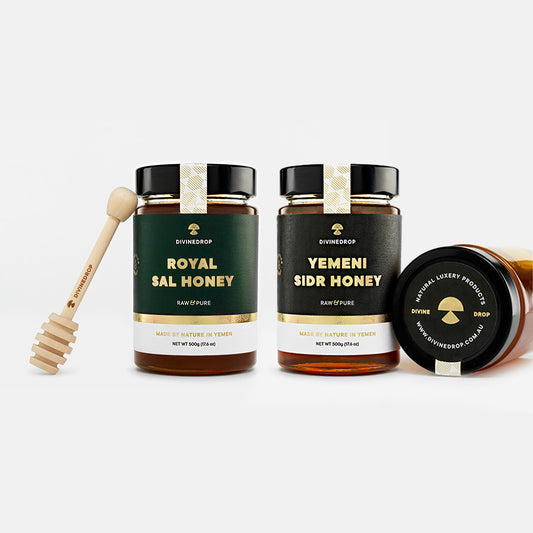
- Mixed with Sidr or Sumra to soften it. Plenty of our customers buy Sal and Sidr together for exactly this reason.
How to tell real Sal honey
- The burn. Real Sal always leaves a warmth in the throat. No burn, no Sal.
- The colour. Golden to deep golden. Be wary of "green" Sal.
- The crystals. Coarse, crunchy, forming in stages.
- The price. Sal is as rare as Premium Sidr and priced like it. A cheap Sal is a warning sign.
- The seller. Ask where in Yemen it comes from. The answer should be Taiz, Ba'adan or Ibb.
Storing Sal honey
At room temperature, sealed, out of the sun. It will crystallise; that is normal. Do not refrigerate it, and do not heat it above 40°C.
Royal Sal: why we sell only one grade
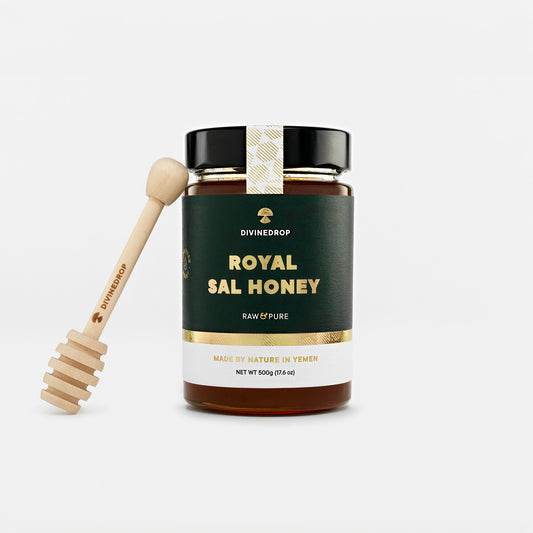
Every jar comes from the Taiz region, is raw and cold-extracted, and is packed in Australia from a single season. The Royal name is earned by rarity alone. See Royal Yemeni Sal Honey.

Frequently asked questions
Is the burning normal?
Yes. It is Sal's signature, caused by natural compounds from the Euphorbia plant, and it can last from minutes to hours.
Is Sal honey safe?
Yes. The bees' processing makes the nectar safe, and it has been eaten across Yemen for centuries.
Can children and pregnant women eat Sal honey?
Yemeni tradition considers Sal a "hot" honey and does not give it to pregnant women. Many children find the heat too strong. Like all honey, it is not suitable for infants under 12 months.
How much Sal honey is produced?
Very little, and not every year. When a season fails, there is simply none.
More about where this honey comes from: the Taiz mountains.
Sources
- No published research on this honey yet; facts from DIVINEDROP's sourcing records and Product Science