Yemeni Honey: A Guide to Sidr, Sal and Sumra
· UpdatedYemeni honey is some of the most sought-after honey in the world, and some of the least understood. This guide explains what makes it different, the three Yemeni honeys we sell, when each is harvested, and how to choose.

What is Yemeni honey?
Yemeni honey is honey made in Yemen by the country's native bee, Apis mellifera jemenitica, mostly by nomadic beekeepers who move their hives through remote valleys and mountains to follow single flowering seasons. Its best-known varieties are Sidr, Sal and Sumra, each named after the plant the bees feed on.
Why Yemeni honey is different
- A native bee. Apis mellifera jemenitica is heat-tolerant and resistant to Varroa mites, so good beekeepers use no chemicals.
- Isolated valleys. In places like Wadi Doan, cliffs and distance keep out farms and other flowers, so one plant dominates each season.
- An inherited craft. Nomadic beekeeping is passed down through families, and Yemeni honey has been traded for thousands of years.
- Scarcity. Harvests are short, remote and dependent on rain.
A short history of Yemeni honey
Yemen has kept bees for thousands of years, and Yemeni honey was traded across Arabia long before modern borders. The craft of nomadic beekeeping, moving hives through the valleys to follow each flowering, is still passed from father to son. Much of Yemen's best honey comes from Hadramout, where Prof. Muhammad Saeed Khanbash of Hadramout University has documented its bees, trees and seasons.
Hadramout: Yemen's honey heartland
Hadramout's deep valleys, such as Wadi Doan, hold dense stands of wild Sidr trees; one survey by Prof. Khanbash counted about 50.8 trees per hectare in Wadi Shohouh. Cliffs and distance keep out farms and competing flowers, which is why Hadramout's Sidr is so pure.
The three Yemeni honeys we sell
Sidr: the golden honey of October
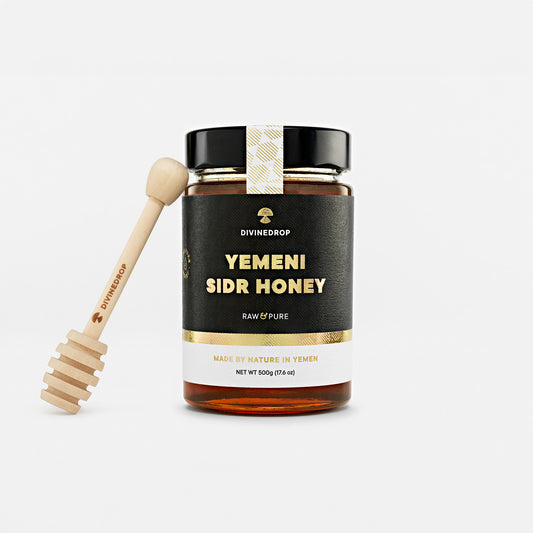
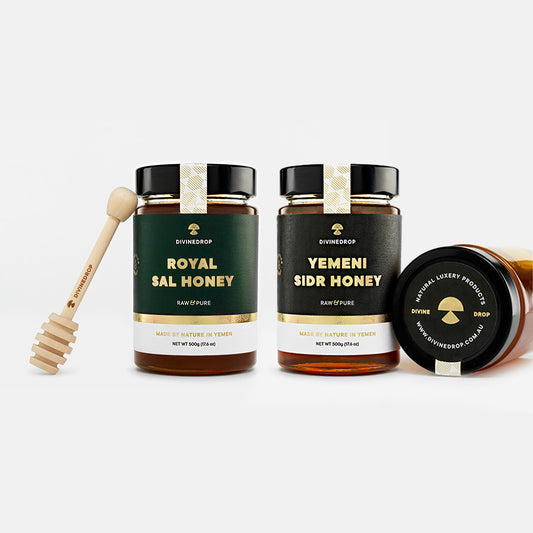
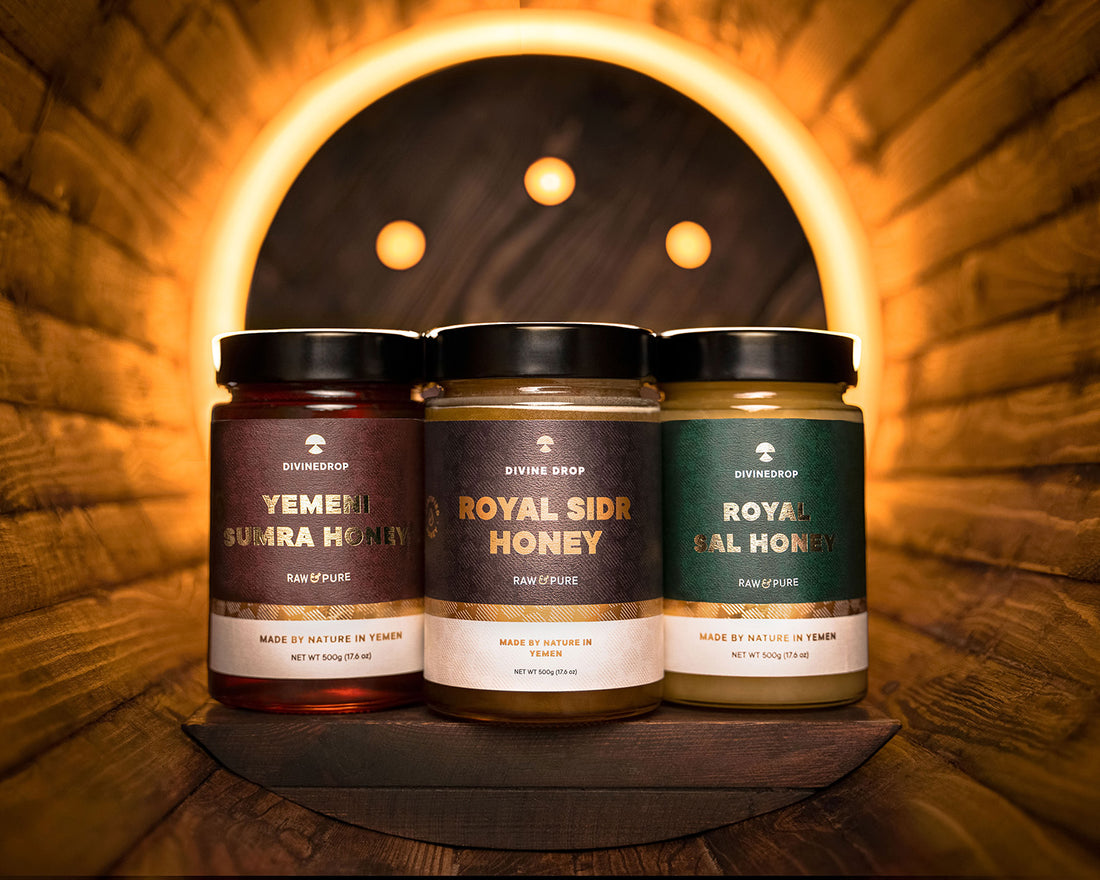
From the Sidr tree of Wadi Doan, harvested at the October peak. Floral, caramel, long finish. Premium (TA 26.8; 1-Star Great Taste 2025 and 2026) and Royal (TA 33.4; 2-Star Great Taste 2026). Read what Sidr honey is.
Sal: the hot honey of the mountains
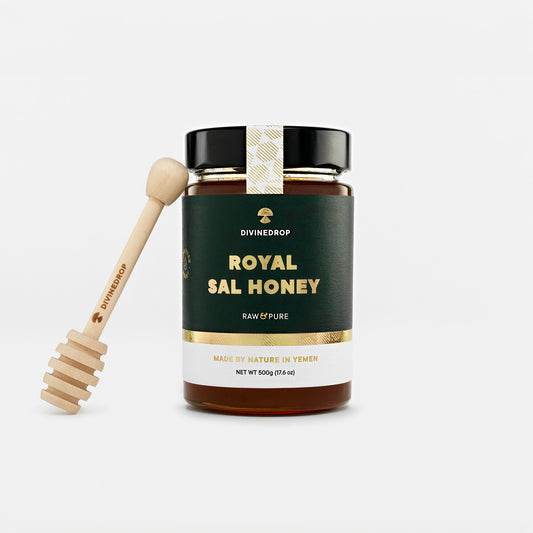
From the Euphorbia plant of Taiz. Golden, less sweet, with a natural heat that builds in the throat. Rare, and graded Royal. Read the Sal honey guide.
Sumra: the dark honey after the rain
From the acacia of Wadi Doan, harvested in May and June only after rain. Near-black, roasted-date flavour. 2-Star Great Taste 2026. Read about Sumra honey.
Yemen's honey calendar
| Season | Months | Honey |
|---|---|---|
| Sidr (Baghyah) | October–mid November | Sidr |
| Sal | From early October | Sal (Taiz, Ba'adan, Ibb) |
| Sumra | May–June, after rain | Sumra |
| Marai | July–September | Mixed wildflower |
Yemeni honey benefits: what tradition says
In Yemen each honey has its own role: Sidr for daily wellbeing, guests and weddings; Sal for the throat, the chest and winter; Sumra for the stomach. These are long-held traditions, which we cover with the research in Sidr honey benefits and Sal honey benefits. We also cover Sumra honey benefits and the Yemeni Khalta. They are not medical claims.
How to choose
| If you want… | Choose |
|---|---|
| A classic, rich everyday honey or a gift | Sidr |
| Something unusual, for winter | Sal |
| A dark, less sweet honey, taken for the stomach in Yemen | Sumra |
| All three | The Yemeni Honey Trio |
Yemeni honey in Yemeni life
Honey is part of every important moment in Yemen: breaking the fast in Ramadan, weddings, the birth of a child, and visiting the sick. Serving good Sidr to a guest is a mark of respect.
Storing Yemeni honey
Keep every Yemeni honey at room temperature, sealed and out of the sun. Do not refrigerate it, and never heat it above 40°C. Sidr and Sal crystallise; Sumra rarely does. Crystals are natural and do not affect quality.
Is Yemeni honey raw?
Good Yemeni honey is raw: pressed from the comb without heat, not filtered and not blended. Ours is cold-pressed in a stainless steel press in Yemen, tested in New Zealand and packed in Victoria, with nothing added.
Where Yemeni honey is sold in Australia
You will find Yemeni honey online, in Middle Eastern grocers and at markets. Quality varies widely. Ask any seller the questions in our buying guide; a seller who knows their honey will be glad to answer.
How to spot real Yemeni honey
Ask for the valley, the season, a current lab report and a certificate of origin. Our guide on how to buy authentic Sidr lists the fakes to avoid.
Why buy from a Yemeni-owned brand?
Yemeni honey is traded through long chains of middlemen, and every step is a chance for honey to be mixed or regraded. A Yemeni-owned brand with its own beekeeper can tell you which valley, which season and which person produced your jar. Our founder Tawfik has worked in Yemeni honey since 2008 and with our beekeeper since 2011.
Frequently asked questions
What is the best Yemeni honey?
Sidr is the most prized, but the best depends on what you want. In 2026 our Royal Sidr and our Sumra both won 2 stars at Great Taste.
Can I buy Yemeni honey in Australia?
Yes. We are Yemeni-owned and pack in Victoria, shipping across Australia except Western Australia, and overseas to the countries listed here. See our Pure Yemeni Honey collection.
The studies behind this page, and what each one does and does not show, are listed on our research page.
More about the valley this honey comes from: Wadi Doan, Hadramout.